Instrument Rating in North Carolina: 2026 Costs Guide
Published by:
CK.
Published on:
Updated on:
Read time:
10 min read
An instrument rating (IR) is the certificate that lets you fly legally in clouds, low visibility, and most weather conditions you will face as a professional pilot. If you are searching for affordable or accelerated IFR training in North Carolina, the first thing to understand is that cost and speed are not opposites: a focused, full-time program can deliver both.
The national market range for instrument rating training in 2026 runs from $22,000 to $28,000 when aircraft, instructor fees, written exam, checkride, and materials are priced separately. At M2A Aviation Academy, the Instrument Rating program is $14,000 and structured to finish in 8 weeks on a full-time schedule.
What the Instrument Rating Actually Costs in 2026
The published price at most flight schools covers aircraft and instructor time. It rarely covers everything. Before you compare numbers, ask what each figure includes.
| Cost Area | What to Watch | M2A’s Approach |
|---|---|---|
| Aircraft rental | Hourly rate × total flight hours needed | Piper Cherokee fleet with glass cockpit avionics |
| Instructor fees | Billed separately at many schools | Included in the $14,000 program cost |
| FAA IRA knowledge test | Often billed as an add-on | Included |
| Checkride fee | Examiner fees vary, timing adds proficiency costs | Two in-house DPEs reduce scheduling delays |
| Ground school | Some schools charge separately | Structured ground training is part of the syllabus |
| Housing | Short-term rentals near many flight schools are expensive | Ask about on-site accommodations if you are relocating |
The honest total for IFR training at a school that bills every item separately can run well above the advertised aircraft rate. That is the gap M2A focuses on eliminating.
For a full breakdown of what pilot training costs across every certificate and rating, read The Real Cost of Pilot Training in North Carolina 2026.
Why “Cheap IFR Training” Often Cost You More
A lower hourly rate is not the same as a lower final bill. A student who flies twice a week instead of daily needs more review sessions, takes longer to build instrument scan, and may need extra flights before the checkride. Every extra flight is another line on the invoice.
Three cost multipliers that add up fast:
- Examiner wait times. At many schools, you finish your instrument training and then wait 3 to 8 weeks for a DPE to become available. During that time, you still need proficiency flights. Those flights add cost without adding a new certificate.
- Aircraft downtime. One airplane out of service at a small school can push your entire schedule back by a week or more. Extra ground time means extra living expenses.
- Inconsistent instruction. High turnover among junior instructors means repeating concepts you already covered. That repetition costs you both time and money.
M2A addresses all three directly. The school maintains two Designated Pilot Examiners on staff, an in-house maintenance team, and a standardized syllabus delivered by instructors with over 10,000 hours of experience, including veteran airline captains and former military pilots.
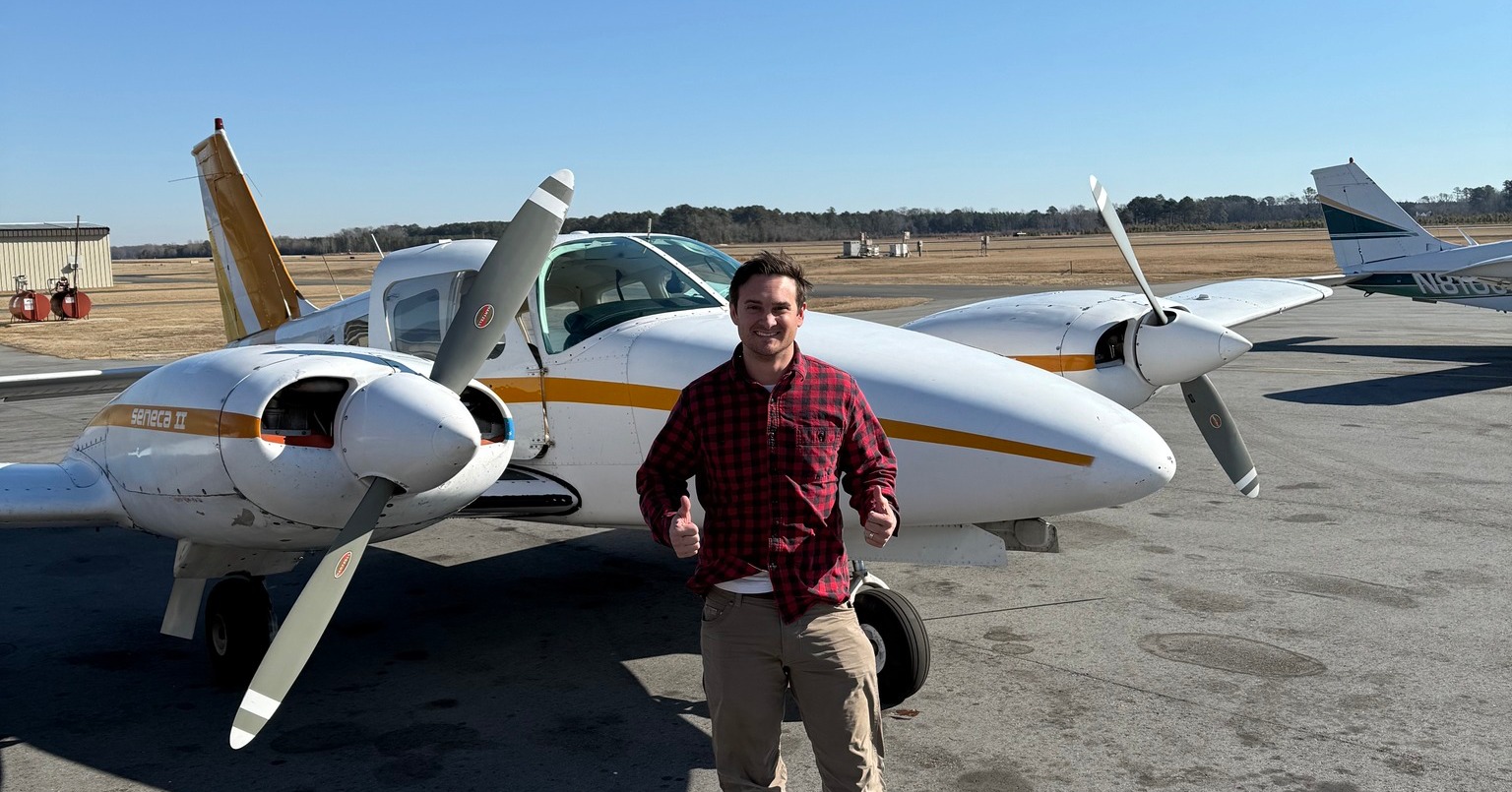
How Accelerated IFR Training in North Carolina Works at M2A
The M2A Instrument Rating program is 8 weeks of full-time, Part 61 and 141 training. Monday through Friday, eight or more hours a day. That pace is what makes the difference between a program that runs 8 weeks and one that stretches to 8 months.
The structure matters for three reasons:
Skill retention. Instrument flying is heavily technique-dependent. Students who fly daily build an instrument scan, nail approach procedures, and hold altitudes with far fewer reviews than students who fly on weekends only.
Momentum. You stay in the IFR mindset continuously. Weather briefings, ATC calls, hold entries, and approach plates become part of daily thinking, rather than something you re-learn each session.
Calendar efficiency. Finishing in 8 weeks means you move to the next certificate 4 to 8 months sooner than a part-time path. If your goal is a commercial pilot certificate and beyond, that head start compounds.
The M2A instrument rating is built as part of a full career sequence. It connects directly to the Commercial Pilot program and the full Professional Pilot Track.
The North Carolina Weather Advantage for IFR Students
This is not a generic claim. The central North Carolina climate, featuring four distinct seasons, spring and fall weather cycles, coastal moisture, produces regular actual Instrument Meteorological Conditions (IMC). IMC refers to real cloud ceilings, real reduced visibility, and real conditions that require instrument procedures.
Students at Wayne Executive Jetport (KGWW) in Pikeville, North Carolina have the unique opportunity to earn actual real world IMC hours. Not just simulated hours like many other flight schools. Due to the unique changing weather over eastern NC. That is a meaningful edge. Many schools in drier climates log most of their required hours in simulated conditions using a view-limiting device. Logging actual IMC hours means your instrument rating reflects real experience, not just simulator time.
At the same time, you build Air Traffic Control communication skills during structured cross-countries to nearby towered airports. Airlines expect pilots who are comfortable on frequency. Training where ATC contact is integrated into your cross-country routes, rather than a special event, gets you there faster.
M2A vs. Part-Time IFR Options: An Honest Comparison
M2A is not the right fit for every student. Here is a direct comparison to help you decide.
| Factor | Part-Time Local School | M2A Full-Time Program |
|---|---|---|
| Timeline | 6 to 18 months to finish IR | 8 weeks |
| Program cost | $22,000–$28,000 (before extras) | $14,000 all-in |
| Examiner access | 3–8 week average wait | Two in-house DPEs |
| Actual IMC hours | Varies, often low | 35 hours typical |
| Instructor experience | Varies widely | Airline captains, ex-military |
| Maintenance responsiveness | Often outsourced | In-house team |
| Best fit | Local students, flexible schedule, no career urgency | Students committed to a professional pilot career |
If your goal is a career-track sequence and you can commit to full-time training, the 8-week structured path is worth the relocation. If your situation requires part-time flexibility, M2A is not built for that, and a local school may serve you better.
Housing If You Relocate to Train
Relocating for 8 weeks of training is a real cost. Students enrolled in the full Professional Pilot Track, which includes the instrument rating as part of the sequence, receive on-site, fully furnished housing as part of program.
If you are enrolling in the standalone instrument rating, ask directly about on-site accommodations. Having housing close to the airport removes commuting time, keeps you focused, and eliminates the need for a short-term lease in an unfamiliar area.
For more information on what is covered when you live on campus, see the guide to M2A’s flight school housing.
Instrument Rating Instructor Quality: What to Ask Before You Enroll
Not all instrument rating instructors are equal. Before you pay a deposit, ask these questions:
- How many hours does the average CFII at this school have? Junior instructors can teach the material, but senior instructors with real IMC experience, including airline and military backgrounds, catch the pattern errors that matter on a checkride.
- What is the checkride pass rate? A school that tracks and publishes this is one that takes standardization seriously.
- Who handles the checkride? Schools with in-house examiners tend to have tighter alignment between training standards and checkride expectations.
- What happens if you need a retest? Know the cost and process before you commit.
At M2A, instructors include veteran airline captains and former military pilots. The school also has two Designated Pilot Examiners on staff, which means the people who train you and the people who test you operate inside the same standardized environment.
For context on financing your training — including whether loans or payment plans are available — visit the financing page.
Frequently Asked Questions
-
How much does an instrument rating cost in North Carolina in 2026?
The typical market range is $22,000 to $28,000 when each item is priced separately. M2A’s Instrument Rating program is $14,000 and includes aircraft, instructor time, FAA knowledge exam, and structured ground training in an 8-week full-time format.
-
How long does it take to get an instrument rating in an accelerated program?
At M2A, the instrument rating takes 8 weeks on a full-time, Monday-through-Friday schedule. Part-time programs at local schools can take 6 to 18 months depending on how often you fly and schedule availability.
-
Is accelerated IFR training as thorough as a longer program?
Yes — if the structure is right. Accelerated training is more demanding on a daily basis, not less. The advantage is that daily flying builds skill retention faster. Flying every day is closer to how airline pilots actually operate.
-
Can I log actual IMC hours in North Carolina?
Yes. Central North Carolina’s climate and four-season weather cycles produce regular actual Instrument Meteorological Conditions. Students at KGWW typically log 30 or more hours in actual IMC during instrument rating training, which is significantly more than drier training environments offer.
-
Do I need housing if I relocate to North Carolina for IFR training?
Students in the standalone instrument rating should ask directly about on-site accommodations. Students in the full Professional Pilot Track receive furnished housing as part of the program.
-
What makes an instrument rating instructor qualified?
Look for CFII certification, meaningful actual IMC experience, and a track record of checkride preparation. At M2A, CFIIs include veteran airline captains and former military pilots, and checkrides are conducted by two in-house DPEs aligned with the same training standards.
-
Can I finance the instrument rating?
Financing options are available for qualifying students. Visit the financing page to review current options before your enrollment call.
Start Your IFR Training at M2A
The instrument rating is the step that separates fair-weather pilots from pilots who can fly in real conditions — and it is the second checkpoint on the path to a professional aviation career.
At M2A Aviation Academy, the 8-week Instrument Rating program is $14,000, full-time, and builds 30 or more actual IMC hours at an efficient North Carolina airport with in-house examiners and senior instructors.
Review the full Instrument Rating program page or reach out on the contact page to ask about scheduling, enrollment, and on-site housing.